
Bubble Mailer Surface Materials Comparison: PE Coextruded Film, Kraft Paper, OPP Pearl Film & Aluminum Foil Film
November 2, 2026
Many bubble mailer factories and e-commerce packaging buyers get stuck during sampling and production scheduling. The bubble liner may look similar, but the outer surface layer directly affects waterproof performance, tear resistance, printing quality, cost, and suitability for cross-border shipping.
Four surface materials are commonly used in the bubble mailer market: PE coextruded film, kraft paper, OPP pearl film, and aluminum foil film. Below we compare their real-world performance, advantages, limitations, and ideal use cases from a converter and packaging buyer perspective.
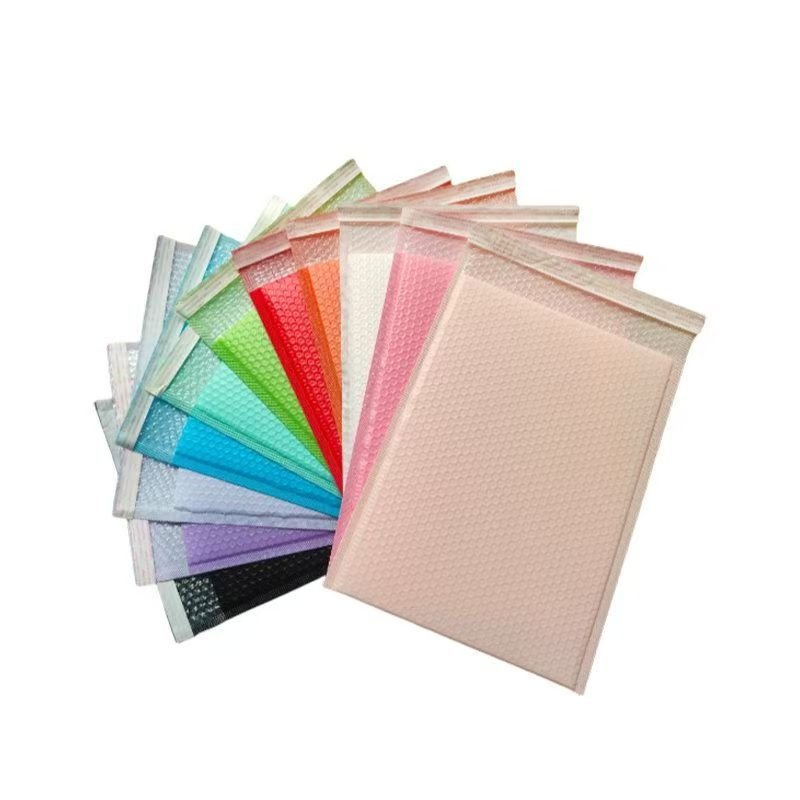
1. PE Coextruded Film – Top Choice for Cross-border and High-volume E-commerce
PE coextruded film is a multi-layer polyethylene material produced by co-extrusion. It is currently the mainstream outer layer for poly bubble mailers used in apparel, books, accessories, and small e-commerce parcels, especially for cross-border production.
- Performance: Multi-layer structure provides higher tensile strength and puncture resistance than single-layer PE film. It remains flexible at lower temperatures and is less likely to become brittle. It can be made in matte, gloss, colored, opaque white, or custom-color versions. It bonds well to bubble cushion during lamination, with low delamination and wrinkling risk.
- Pros: Excellent waterproof and moisture-proof performance. Wide color options, including black, white, and custom colors. Stable printing results. Lightweight, which helps reduce shipping costs. Good flex resistance for long-distance transit. Same-material structure makes recycling easier.
- Best for: Domestic courier bubble bags, Amazon and cross-border e-commerce, apparel, accessories, books, small electronics, humid climates, and sea freight shipments.
- Limitations: Plastic appearance may not fit natural eco-friendly brand positioning. Long-term exposure to strong sunlight and high temperature can accelerate aging.
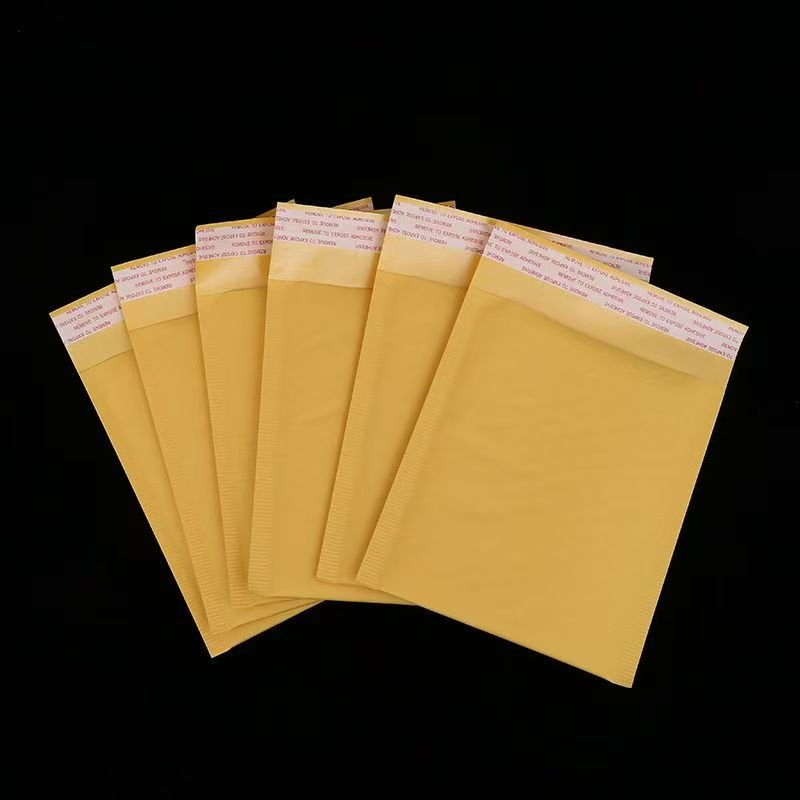
2. Kraft Paper – Natural, Writeable Surface for Eco-focused Packaging
Kraft paper bubble mailers are the classic brown or white padded envelopes often seen in book, stationery, and gift packaging.
- Performance: Paper fiber structure provides good stiffness. The surface is easy to write on and label. It accepts ink well and delivers a clean natural print effect. It is usually made of 70–100 gsm strong kraft paper laminated to bubble cushion.
- Pros: Natural and eco-friendly appearance, which many overseas brands use as part of sustainable packaging storytelling. Rigid and less floppy, so it helps protect books and catalogs from bending. Low sampling and trial order threshold.
- Best for: Books, stationery, art prints, cosmetic samples, light gifts, and DTC brands focusing on green packaging.
- Limitations: Poor water resistance. Once wet, it becomes soft and tears easily. Heavier than plastic film options, so freight cost is higher. Bright full-color printing is limited.
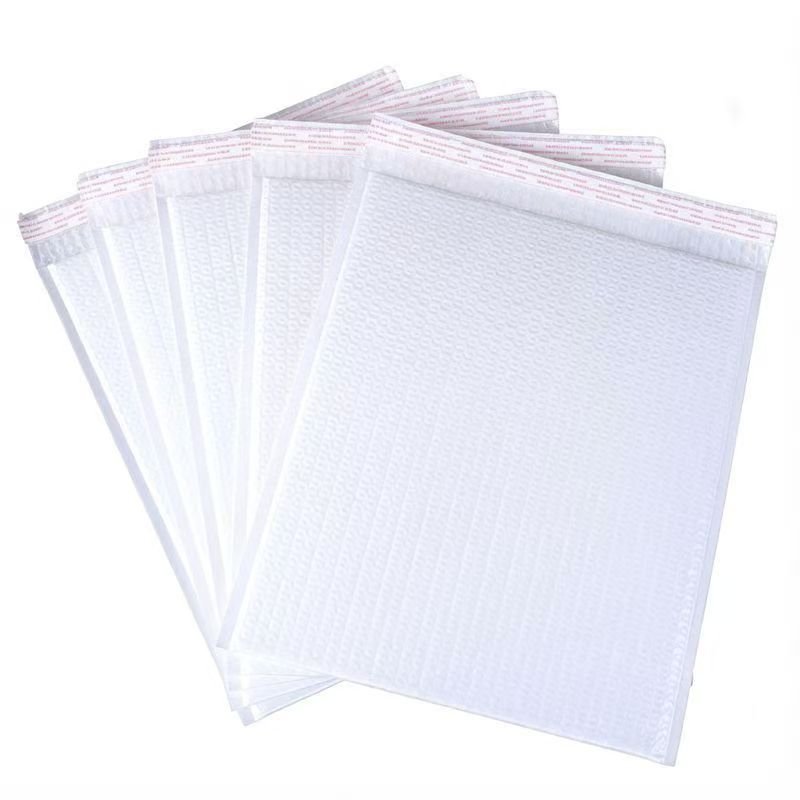
3. OPP Pearl Film – Glossy, Premium-looking Surface for High-value Items
OPP pearl film is a polypropylene-based surface material with a pearlescent appearance. It is often used as a decorative upgrade for bubble mailers, especially in beauty, jewelry, and small premium product packaging.
- Performance: Smooth surface with attractive pearlescent luster. It is stiffer than standard PE coextruded film, so the finished mailer holds its shape better. It also offers good light-blocking properties.
- Pros: High visual appeal. Bright color printing creates strong brand recognition. The finished bag looks neat and premium. Good dust resistance.
- Best for: Jewelry, makeup, skincare samples, small luxury accessories, subscription boxes, and trendy DTC brands.
- Limitations: Less flexible than PE coextruded film. Repeated folding can cause white creases or cracking. Brittle in cold conditions. Higher material cost for large-volume production.
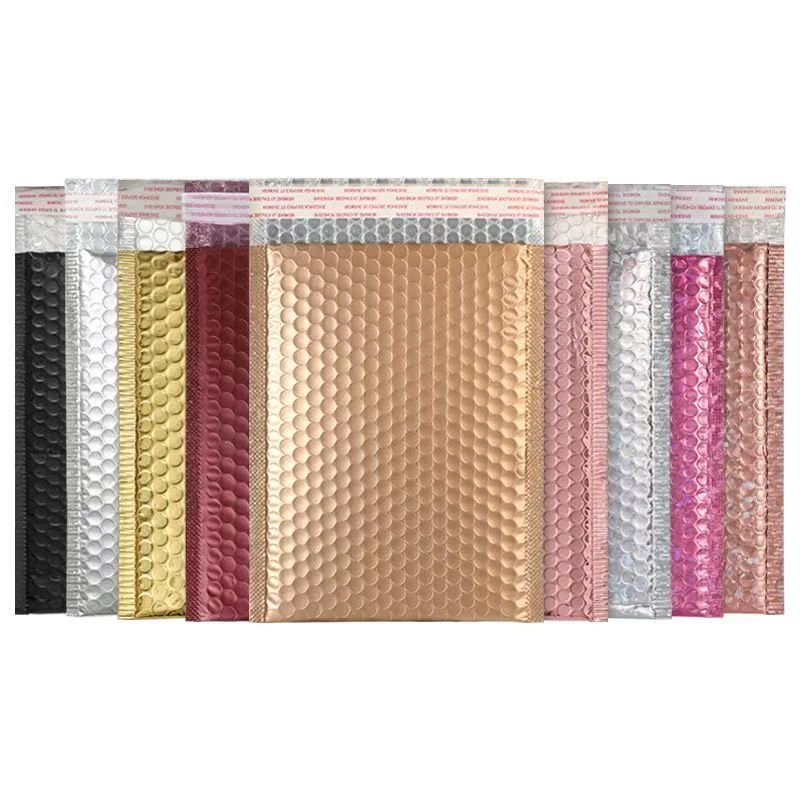
4. Aluminum Foil Film – Heat Insulation, Light Blocking and Premium Metallic Look
Aluminum foil film, often metallized PET or aluminum-plated composite film, is used when bubble mailers need better light blocking, heat insulation, moisture resistance, or a high-end metallic appearance.
- Performance: Aluminum foil film provides strong light blocking, good moisture barrier, and certain heat insulation properties. It has a metallic silver or customized reflective surface. It can be used as a barrier outer layer for bubble mailers where standard PE or paper is not enough.
- Pros: Excellent light blocking and moisture barrier. Good heat insulation for temperature-sensitive products. Premium metallic appearance, which can make the mailer look more exclusive. Better puncture resistance than thin PE film in some structures.
- Best for: Heat-sensitive products, cosmetics, pharmaceuticals, food supplements, high-value electronics, promotional packaging, and luxury gift items.
- Limitations: Higher cost than standard PE coextruded film. Poor flexibility and crease resistance compared to PE. Easy to show scratches and fold marks. Printing and lamination processes are more demanding. Not the best choice for heavy-duty courier use.
Quick Comparison Table
| Surface Material | Waterproof / Moisture Barrier | Tear & Puncture Resistance | Printing Performance | Main Application |
| PE Coextruded Film | ✅ Excellent | ✅ Excellent | Good, stable color printing | E-commerce, cross-border, apparel, books |
| Kraft Paper | ❌ Poor | Moderate, weakens when wet | Good for natural single-color print | Books, stationery, eco-focused brands |
| OPP Pearl Film | ✅ Good | Fair, prone to crease cracking | ⭐ Bright and glossy printing | Beauty, jewelry, premium small items |
| Aluminum Foil Film | ✅ Very Good | Moderate | Limited, better for metallic effects | Heat-sensitive products, barrier packaging |
How to Choose the Right Surface Material
For bubble mailer factories, the best choice depends on the order requirement, target market, and end product.
If the customer wants a balanced, cost-effective material for high-volume shipping, PE coextruded film is usually the first choice. If the brand emphasizes natural packaging and sells books or stationery, kraft paper is a better fit. If appearance is the main selling point, OPP pearl film can support a more premium look. If the product needs light blocking, moisture protection, or heat insulation, aluminum foil film is worth considering.
Before production, confirm the lamination method, adhesive system, curing condition, and ink compatibility. Different surface materials require different process settings, and that can affect delamination, ink adhesion, and final bag quality.
FAQ
Q: Can aluminum foil film replace PE coextruded film for standard bubble mailers?
A: It can, but only if the order requires barrier properties or a metallic appearance. For regular e-commerce shipping, PE coextruded film is usually more flexible, more reliable, and more cost-effective.
Q: Is aluminum foil film more expensive than other bubble mailer surfaces?
A: Yes, it is generally more expensive than standard PE coextruded film and kraft paper. It is more suitable for high-value or special-protection packaging.
Q: Which surface material is best for heat-sensitive products?
A: Aluminum foil film is better than standard PE, kraft paper, or OPP pearl film when light blocking and heat insulation are required.